
Cybersecurity often starts with software. Firewalls, passwords, and encryption help protect data from online threats.
Yet, every network depends on physical equipment.
Servers, switches, cables, and other hardware can become vulnerable when the wrong person gains access. A strong security plan should protect both the network and the equipment behind it.
Physical security adds another layer of defense.
Digital security tools protect systems from online threats. They cannot always stop someone from reaching a server or network device in person.
Physical access can create several risks. An unauthorized person could tamper with equipment, remove hardware, or reach network connections.
Limiting access to critical equipment helps reduce those risks.
Physical security and cybersecurity work best as part of the same plan.
One locked door may not protect every system.
A data center may control access at the building entrance. The server room may add another layer. Individual server cages can further limit access.
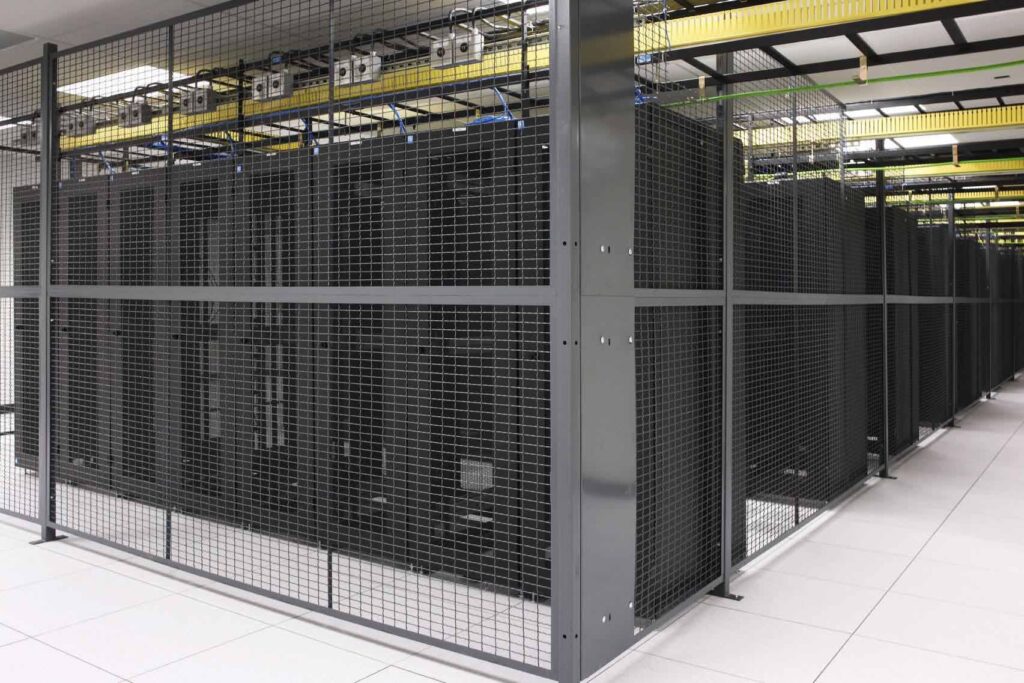
WireCrafters server cages can create dedicated areas around servers and network equipment. Facilities can secure one rack or groups of racks based on their needs.
The added barrier helps keep critical hardware separate from other parts of the facility.
Not every employee, vendor, or visitor needs access to network equipment.
Access control can help facilities decide who enters a secure area.
WireCrafters offers several lock options for ColoCage server cages. Options include key locks, keypads, card readers, biometric readers, and electronic locking systems.
The right setup depends on the facility and its security plan.
Controlled entry can help limit access to sensitive hardware to approved users.
Physical security becomes even more important in shared environments.
Colocation facilities may house equipment for several customers in the same building. Employees and service teams may also move through common areas.
A Style 840 Server Cage can create a defined space for each customer or group of equipment.
Wire mesh keeps the equipment visible while adding a physical boundary. Facilities can also use separate access controls for different secured areas.
A secure door only protects one part of the perimeter.
Teams should also review the space above and below critical equipment. Raised floors, drop ceilings, and nearby building systems can affect the security plan.
WireCrafters offers ceiling panels and custom cage configurations for applications that need added coverage. Wire partitions can also extend below raised floors in certain layouts.
A complete review can help teams find physical gaps before they become security concerns.
Physical protection must still work with the equipment inside the cage.
Servers need airflow. Data centers also rely on lighting, cooling, and fire suppression systems.
Wire mesh allows air and light to pass through the secured area. The open design also maintains visibility around the equipment.
Facilities can add physical protection without placing a solid wall around every server rack.
IT environments change fast.
A facility may add server racks, move equipment, or change the way teams use a space. Physical security may need to change with it.
WireCrafters server cages use modular wire mesh panels. Teams can reconfigure many layouts as equipment needs change.
Security planning should remain part of the process whenever a facility adds or moves critical systems.
A cybersecurity plan should not end at the network.
Physical access matters because digital systems rely on real equipment. Protecting servers and network hardware adds another layer to a broader security strategy.
Review who can reach critical equipment. Look for gaps around secure areas. Then choose physical controls that match the risks.
If your facility needs better physical protection for servers or network equipment, contact our team to discuss a WireCrafters server cage solution.



We have the expertise and the capacity to craft the perfect solution for you!
| Privacy Policy | Cookie Policy | Website Design by The Marketing Squad