What Is a Cloud Data Center?

Key Characteristics of a Hyperscale Data Center

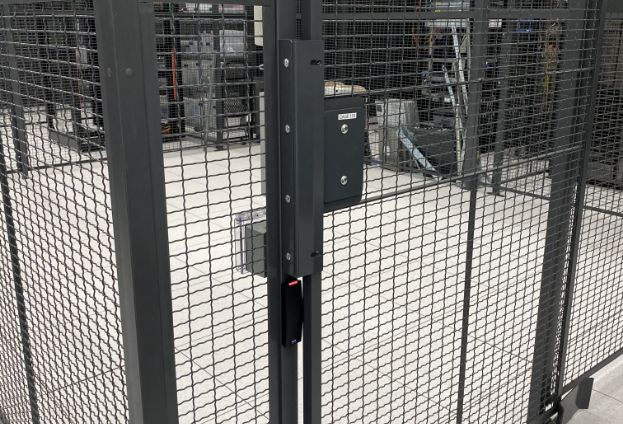
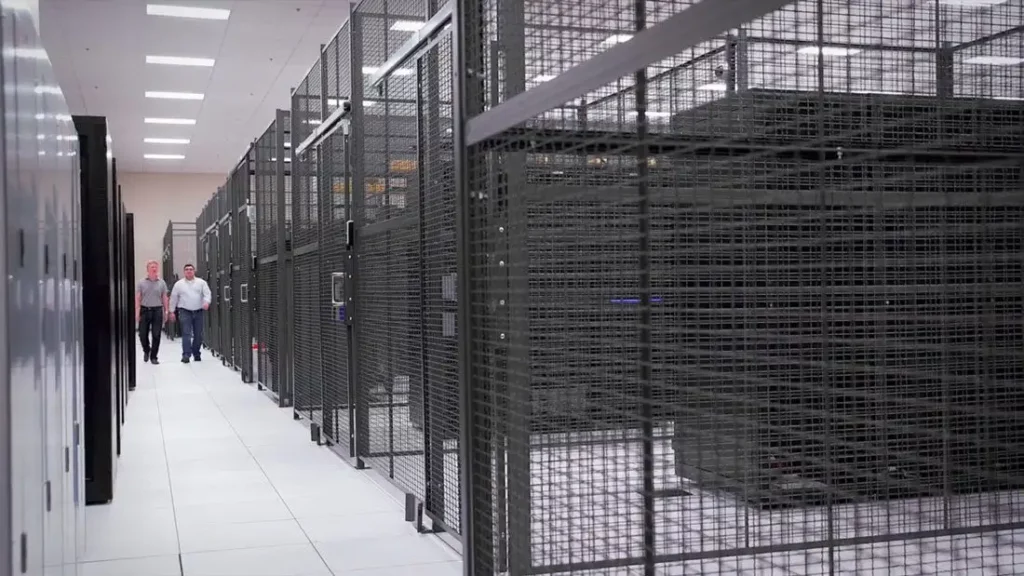
Not long ago, businesses had to purchase, install, and maintain their own servers to run applications, store files, and support daily operations. Today, organizations can access computing resources on demand without owning the physical infrastructure. Cloud data centers make that possible.

A cloud data center is a facility that houses the servers, storage systems, networking equipment, and supporting infrastructure used to deliver cloud computing services over the internet. Instead of operating their own hardware, businesses can access computing resources provided by a cloud service provider whenever they need them.

Cloud data centers serve as the foundation for many of the applications, platforms, and services people use every day.

How Cloud Data Centers Work

Cloud providers build and operate large networks of data centers to support customers worldwide. These facilities provide the physical infrastructure needed to deliver cloud computing services.

When a business uses cloud-based applications, stores files online, or deploys virtual servers, those resources typically run inside a cloud data center.

Users access these services through the internet while the cloud provider manages the underlying infrastructure, including:

This model allows organizations to focus on their operations instead of managing physical IT infrastructure.

Types of Cloud Services Supported by Cloud Data Centers

Cloud data centers support a wide range of services designed to meet different business needs.

Infrastructure as a Service (IaaS)

IaaS provides virtualized computing resources, including servers, storage, and networking. Businesses can deploy and manage applications without purchasing physical hardware.

Platform as a Service (PaaS)

PaaS provides a development environment where organizations can build, test, and deploy applications without managing the underlying infrastructure.

Software as a Service (SaaS)

SaaS delivers software applications directly to users through the internet. Popular business tools, collaboration platforms, and customer relationship management systems often operate using this model.

Benefits of Cloud Data Centers

Organizations of all sizes use cloud services because they offer flexibility and scalability that traditional infrastructure may not provide.

Scalability on Demand

One of the biggest advantages of cloud computing is the ability to scale resources as needed.

Businesses can quickly increase or decrease computing capacity in response to workload demands without purchasing additional equipment.

This flexibility allows organizations to adapt to changing business requirements more efficiently.

Reduced Capital Investment

Building and maintaining a private data center requires high upfront costs.

Cloud services eliminate many of those expenses by allowing businesses to pay only for the resources they use. Organizations avoid large investments in hardware, facility infrastructure, and ongoing maintenance.

Faster Deployment

Cloud platforms allow businesses to deploy applications and services quickly.

Instead of waiting for new hardware installations, organizations can often provision servers, storage, and networking resources within minutes.

Global Accessibility

Cloud data centers support users across multiple locations and regions. Employees, customers, and partners can access applications and data from virtually anywhere with an internet connection.

This accessibility has become especially valuable for remote and hybrid work environments.

Public, Private, and Hybrid Cloud Models

Cloud data centers support several deployment models depending on an organization's requirements.

Public Cloud

Public cloud services provide shared infrastructure that multiple customers access through a cloud provider's platform.

This model often offers the greatest scalability and cost efficiency.

Private Cloud

Private cloud environments dedicate infrastructure to a single organization.

Businesses often choose private cloud solutions when they require greater control, customization, or regulatory compliance.

Hybrid Cloud

Hybrid cloud strategies combine on-premises infrastructure, private cloud resources, and public cloud services.

Many organizations use hybrid environments to balance flexibility, performance, security, and cost management.

Industries That Rely on Cloud Data Centers

Cloud computing supports organizations across nearly every industry.

Common users include:

These organizations use cloud infrastructure to support applications, store data, improve collaboration, and drive digital transformation initiatives.

Security Inside Cloud Data Centers

Cloud providers invest heavily in security to protect customer data and maintain service availability.

Cloud data centers often utilize:

While providers secure the infrastructure itself, customers typically remain responsible for managing access controls, user permissions, and application security.

Why Cloud Data Centers Continue to Expand

Cloud adoption continues to grow as businesses seek greater flexibility, scalability, and operational efficiency. Artificial intelligence, machine learning, big data analytics, and remote work technologies all rely heavily on cloud infrastructure.

As organizations continue modernizing their technology strategies, cloud data centers will remain a critical component of the digital services that power business operations worldwide.

wirecraftes get a quote button

WireCrafters Data Center Solutions Division

Physical Security Best Practices for Colocation Facilities

Physical security is just as important as cybersecurity in a colocation facility. Firewalls and encryption protect digital assets, but they cannot stop someone from walking into a server area. A strong physical security plan helps protect customer equipment, supports compliance efforts, and keeps daily operations running smoothly.

Here are five best practices every colocation facility should consider.

Create Separate Customer Spaces

Many colocation providers serve multiple customers under one roof. Each customer expects their equipment to remain private and protected.

Our ColoCage data center cages create dedicated spaces for each tenant. These enclosures separate servers and network equipment while allowing customers to lease only the space they need.

This layout also helps staff manage the facility more efficiently.

Control Access at Every Entry Point

Not everyone should have access to every part of a data center.

Facilities should limit entry to authorized personnel and document who enters secured areas. Electronic access control, keypads, card readers, and keyed locks all help strengthen security.

Our cage systems support a variety of lock options, allowing facilities to choose the access method that fits their security policies and operational needs.

Protect Critical Infrastructure

Customer equipment is only one part of the operation. Power distribution units, network switches, and support systems also require protection.

Our wire mesh enclosures create secure areas around critical infrastructure without blocking visibility. Teams can perform inspections and maintenance while keeping unauthorized individuals away from essential equipment.

Protecting these systems helps reduce the risk of service interruptions.

Maintain Visibility Across the Data Center

Security improves when employees can quickly see what is happening throughout the facility.

Wire mesh construction provides clear sightlines into secured spaces. Staff can monitor activity, verify equipment locations, and respond to issues without entering every enclosure.

The open design also supports airflow, lighting, and fire suppression systems. This helps facilities maintain both security and equipment performance.

Choose Solutions That Can Grow

Colocation facilities continue to expand as customer demand increases. Security systems should grow along with them.

Our modular cage systems allow facilities to add new enclosures, expand existing spaces, or adjust layouts without major construction. This flexibility helps operators respond to changing customer needs while maintaining consistent physical security.

Strengthen Your Physical Security Strategy

Strong physical security starts with controlled access, organized layouts, and clearly defined spaces. These best practices help protect customer equipment, reduce operational risk, and support long-term growth.

Contact a member of our team today or request a quote to learn more about our colocation security solutions or request a quote for your facility.

wirecraftes get a quote button

WireCrafters Data Center Solutions Division

What Is a Hyperscale Data Center?

Streaming platforms, artificial intelligence, and cloud services require massive amounts of computing power. As digital demand grows, technology companies need facilities that can handle large workloads at scale. This demand has fueled the growth of hyperscale data centers.

A hyperscale data center is a large facility built to support extensive computing infrastructure. These facilities can grow as technology needs change. Operators can add servers, storage, and network resources as demand increases. Hyperscale data centers often support cloud platforms, AI applications, big data, and global online services.

Companies such as Amazon Web Services, Microsoft, Google, and Meta operate some of the largest hyperscale data centers in the world.

How Hyperscale Data Centers Differ From Traditional Facilities

Traditional enterprise data centers often support the needs of one organization. Hyperscale facilities operate on a much larger level. They can support thousands of servers and huge amounts of traffic across global networks.

These facilities prioritize:

Hyperscale operators also plan for growth from the start. Many facilities expand in phases. This approach allows operators to add capacity without redesigning the entire facility.

Key Characteristics of a Hyperscale Data Center

Massive Scale

Hyperscale facilities can span hundreds of thousands or even millions of square feet. They may house tens of thousands of servers. These servers support cloud computing, streaming services, AI workloads, and other applications.

The size of these facilities also creates unique needs for security, airflow, access, and space management.

Scalability

The ability to scale quickly defines a hyperscale data center. Operators need infrastructure that can grow without major disruptions.

They can add servers, storage systems, and network equipment as workloads increase. Flexible facility designs also make future expansion easier.

Energy Efficiency and Airflow

Hyperscale data centers use large amounts of power. As a result, operators focus on energy use and cooling efficiency.

Advanced cooling systems help control heat from high-density server equipment. Facility design can also help direct airflow and separate different areas.

Wire mesh division walls systems can support these layouts by separating multi-hall galleries while still allowing air to move freely through the space. This open design helps maintain more consistent airflow compared to solid wall construction, which can restrict circulation. Operators can use these systems to create defined areas without compromising airflow performance.

Automation

Hyperscale data centers rely on automation to manage large and complex environments. Automated systems can track server performance, power use, cooling, and security.

This technology gives operators better insight into facility conditions. It can also help teams find and address issues faster.

Redundancy and Reliability

Downtime can affect millions of users at once. Hyperscale facilities use several systems to help maintain reliable operations.

Backup generators, redundant power systems, multiple network connections, and failover systems help protect against service disruptions. Facility teams also plan for maintenance without shutting down critical operations.

Where Hyperscale Data Centers Are Commonly Used

Hyperscale facilities support many of the digital services people use each day, including:

AI has created even more demand for large-scale computing infrastructure. These workloads often require high-performance servers, greater power capacity, and efficient cooling systems.

Storage and Safety in Hyperscale Data Centers

Servers may be the main focus of a hyperscale facility, but these sites also need space for equipment, parts, tools, and other materials.

Storage areas must stay organized and safe. Items stored on pallet racks can create a risk if products fall from the back of the rack. This can put employees, equipment, and nearby work areas at risk.

WireCrafters RackBack® Pallet Rack Backing Safety Panels create a physical barrier along the back of pallet racks. The panels help contain stored materials and reduce the risk of items falling into aisles or work areas.

RackBack® can provide added protection in storage and support areas throughout a hyperscale data center.

Why Hyperscale Infrastructure Continues to Grow

Demand for cloud services, connected devices, streaming content, and AI applications continues to increase. Businesses and consumers also expect fast access to digital services with little downtime.

Hyperscale operators continue to build larger and more advanced facilities to meet those needs. Many companies also expand into new regions to improve network performance and bring services closer to users.

Security Considerations in Hyperscale Facilities

Security plays a critical role in hyperscale operations. These facilities often use several layers of physical and digital protection, including:

The size of a hyperscale facility can make physical separation just as important as access control. Operators may need to divide server halls, equipment areas, storage spaces, and other restricted zones.

Physical barriers can help define these spaces and guide access throughout the facility. They can also support security plans without limiting visibility or airflow.

The Future of Hyperscale Data Centers

AI, automation, and cloud technology continue to change how hyperscale facilities operate. At the same time, operators must find better ways to manage power, cooling, security, and space.

Facility infrastructure will need to evolve with these demands. Flexible physical barriers, airflow-friendly separation, and safer storage solutions can help operators prepare their facilities for continued growth.

wirecraftes get a quote button

WireCrafters Data Center Solutions Division

What Is an Enterprise Data Center?

Every organization depends on technology to keep operations moving. From internal communication and financial systems to customer databases and business applications, companies need secure infrastructure to store, process, and manage critical information. Many organizations handle those responsibilities through an enterprise data center.

An enterprise data center is a private facility owned or operated by a single organization to support its internal IT operations. Unlike colocation or hyperscale facilities that serve multiple customers, enterprise data centers are dedicated solely to one business or organization.

These facilities give companies direct control over their servers, storage systems, networking equipment, cybersecurity measures, and operational infrastructure.

How Enterprise Data Centers Operate

Enterprise data centers support an organization's daily technology needs. Companies may build these facilities on-site at a corporate campus, inside a dedicated building, or within a regional office environment.

IT teams manage and maintain the infrastructure internally, including:

Organizations design enterprise data centers around their specific operational requirements, compliance standards, and long-term business goals. Facility layouts may also include separate data halls, equipment rooms, storage areas, and other controlled spaces. The right physical barriers can help define these areas while supporting security and daily operations.

data center cage with black mesh walls

Why Organizations Use Enterprise Data Centers

While many businesses continue adopting cloud services, enterprise data centers still play a major role in industries that require high levels of control, customization, or regulatory compliance.

Greater Operational Control

Enterprise facilities allow organizations to manage every aspect of their infrastructure. Internal IT teams maintain direct oversight of hardware, security policies, software environments, and system performance.

This level of control can be especially important for businesses with unique operational requirements or legacy systems.

Enhanced Data Security

Many organizations choose enterprise infrastructure because it allows them to implement customized security protocols tailored to their specific risk profile.

Companies often use layered security strategies that include:

Industries handling sensitive information often prioritize maintaining direct ownership of their infrastructure and data environments.

Physical separation can add another layer of protection. Wire mesh partitions can help create defined zones around servers, equipment, and other restricted areas. They can limit access while maintaining visibility throughout the facility.

Compliance Requirements

Healthcare providers, financial institutions, government agencies, and manufacturers may face strict regulatory requirements regarding how they store and manage data.

Enterprise data centers allow organizations to build infrastructure that aligns with industry-specific compliance standards and internal governance policies.

Performance and Reliability

Enterprise facilities let organizations optimize infrastructure for their specific applications and workloads. Businesses can design systems around performance expectations, redundancy requirements, and operational priorities.

Many enterprise data centers include:

Cooling and airflow also play an important role in data center performance. Server equipment produces heat, so facilities need effective ways to manage temperature and airflow.

WireCrafters Air Handling solutions can help divide these spaces without blocking airflow. Wire mesh division walls can separate multi-hall galleries, data halls, and other areas while allowing air to move through the facility. This approach helps create clear boundaries without the airflow limits of a solid wall.

Common Industries That Use Enterprise Data Centers

Many industries continue relying on enterprise infrastructure to support critical operations and protect sensitive data.

Healthcare

Hospitals and healthcare organizations manage patient records, imaging systems, and critical medical applications that require secure and reliable infrastructure.

Financial Services

Banks and financial institutions process sensitive financial transactions and customer information that require strong security and uptime protections.

Manufacturing

Manufacturers use enterprise infrastructure to support production systems, inventory management, automation technologies, and operational analytics.

Government and Defense

Government agencies often maintain enterprise data centers to support secure communications, internal operations, and classified information systems.

Enterprise Data Centers vs. Cloud and Colocation

Enterprise data centers differ from other facility types because organizations own and control the environment.

Enterprise Data Center

Colocation Data Center

Hyperscale Data Center

Many organizations now combine enterprise infrastructure with cloud or colocation services as part of a hybrid IT strategy.

Managing Storage Areas in Enterprise Data Centers

Enterprise data centers need more than server and network space. Many facilities also maintain storage areas for spare equipment, replacement parts, tools, and other supplies. These areas need the same focus on safety and organization as the rest of the facility.

Pallet racks can help facilities make better use of storage space. However, items can fall from the back of a rack and enter an aisle or nearby work area. WireCrafters RackBack® Pallet Rack Backing Safety panels create a barrier along the back of pallet racks. The panels help contain stored items and reduce the risk of materials falling into areas below or behind the rack.

RackBack® helps enterprise data centers create safer, more organized storage areas while maintaining visibility around stored materials.

Challenges Facing Enterprise Data Centers

Enterprise facilities offer control and flexibility, but they also require significant investment and ongoing maintenance.

Organizations must manage:

As technology evolves, many companies continue modernizing enterprise environments to improve efficiency, scalability, and long-term performance.

The Evolving Role of Enterprise Infrastructure

Enterprise data centers continue adapting alongside changing business needs and advancing technology. Many organizations now integrate cloud platforms, automation tools, and AI-driven technologies into their existing infrastructure strategies.

As these facilities change, their physical infrastructure must adapt as well. Flexible separation, efficient airflow, secure spaces, and safe storage can help organizations prepare their enterprise data centers for future demands.

Every enterprise data center has different needs. WireCrafters can help you create secure spaces, improve storage safety, and support airflow throughout your facility. Contact a member of our team to discuss your project or request a quote today. 

wirecraftes get a quote button

WireCrafters Data Center Solutions Division

What Is a Colocation Data Center?

As businesses continue to generate and manage more data, the need for secure, reliable, and scalable infrastructure has become more important than ever. For many companies, building and maintaining a private data center is expensive, time-consuming, and difficult to scale. That is where colocation data centers come in. 

A colocation data center, often called a “colo,” is a facility where businesses rent space to house their own servers, networking equipment, and IT infrastructure. Instead of managing an entire building and its supporting systems, companies place their hardware in a professionally managed facility that provides power, cooling, physical security, and network connectivity.

How Colocation Data Centers Work

In a colocation environment, multiple businesses operate within the same facility while maintaining control over their own equipment. The data center provider manages the building infrastructure, including:

Customers typically lease space in the form of individual cabinets, cages, or private suites, depending on their operational needs and security requirements.

Why Businesses Choose Colocation

Colocation data centers offer several advantages for organizations that need enterprise-level infrastructure without the cost of building their own facility. 

Scalability

Businesses can expand their infrastructure over time without relocating or investing in additional buildings and utilities. Many colocation providers allow customers to add racks, cages, or suites as their needs grow.

Reliability

Most colocation facilities are designed with backup power systems, redundant cooling, and multiple network connections to help maximize uptime and protect critical operations. 

Security

Physical security is a major priority in colocation facilities. Providers often use layered security measures such as controlled access points, surveillance systems, locked cabinets, and secured cages to protect customer equipment.

Reduced Infrastructure Costs

Building a private data center requires significant investment in real estate, electrical infrastructure, cooling systems, and ongoing maintenance. Colocation allows businesses to leverage existing infrastructure while focusing their resources on core operations instead.

Common Types of Colocation Deployments

Not every colocation customer requires the same amount of space or security. Facilities typically offer several deployment options:

Industries That Use Colocation Data Centers

Colocation facilities support organizations across many industries, including:

These organizations often rely on colocation to improve uptime, meet compliance requirements, and support growing digital operations. 

The Growing Demand for Colocation Facilities

As cloud computing, AI applications, and digital services expand, the demand for colocation infrastructure grows alongside them. Businesses need facilities that can support higher power densities, secure environments, and scalable deployments without sacrificing reliability. 

Modern colocation data centers have become critical hubs for connectivity, cloud access, and secure infrastructure management in today’s digital economy.

Looking Ahead

Colocation data centers play an important role in helping businesses manage infrastructure efficiently while maintaining control over their own hardware. From small deployments to large-scale enterprise operations, these facilities provide the security, scalability, and reliability organizations need to support modern technology demands.

wirecraftes get a quote button

WireCrafters Data Center Solutions Division

What Is an Edge Data Center?

When you stream a video, join a video call, use a navigation app, or interact with a smart device, you expect an immediate response. Behind that speed is a growing network of infrastructure designed to process data closer to where it is generated and consumed. That infrastructure often includes edge data centers.

An edge data center is a smaller, strategically located facility that processes and stores data closer to end users, devices, or applications. By reducing the distance data must travel, edge data centers help improve performance, decrease latency, and support real-time applications.

As organizations generate more data through connected devices, cloud applications, and emerging technologies, edge computing has become an increasingly important part of modern IT infrastructure.

Why Edge Data Centers Exist

Traditional data centers often sit hundreds or even thousands of miles away from the people and devices using them. While centralized facilities remain essential, some applications cannot tolerate the delays that come with transmitting data across long distances.

Edge data centers address this challenge by moving computing resources closer to the source of the data.

Instead of sending every request to a centralized facility, organizations can process certain workloads locally. This approach allows systems to respond more quickly and efficiently.

How Edge Data Centers Work

Edge data centers act as local processing hubs within a larger network infrastructure.

When a user accesses an application or a device generates data, the edge facility can process information locally. It can then send only the necessary data to a larger regional or cloud data center.

This approach helps reduce network congestion while improving response times for critical applications.

Edge facilities often support:

Some edge facilities may also support equipment and infrastructure for several customers. These environments need clear physical boundaries to protect each customer's equipment and control access.

data center cage with black mesh walls

The Benefits of Edge Data Centers

Lower Latency

Latency refers to the time it takes for data to travel between devices and applications. Even small delays can impact performance for certain technologies.

By placing infrastructure closer to users, edge data centers help reduce latency and improve application responsiveness.

This is especially important for applications that require near-instant communication.

Improved User Experience

Faster response times often lead to better user experiences. Whether someone is streaming content, participating in a virtual meeting, or interacting with a mobile application, edge infrastructure helps deliver information more quickly.

Reduced Bandwidth Demands

Not every piece of data needs to travel to a centralized facility for processing. Edge data centers can filter, analyze, and process information locally before transmitting only relevant data to larger data centers or cloud environments.

This approach helps reduce network traffic and bandwidth consumption.

Increased Reliability

Local processing capabilities can help organizations maintain operations even when connectivity to a central facility becomes limited.

Many businesses use edge infrastructure to improve resilience and support critical operations in remote locations.

Physical Security in Edge Data Centers

Edge data centers may be smaller than other types of data centers, but physical security remains important. Operators need to protect servers, network equipment, and other critical infrastructure from unauthorized access.

Individual customer security cages can create dedicated spaces within a shared facility. Wire mesh cages provide a physical barrier around customer equipment while maintaining visibility and airflow. Operators can also add controlled access doors and locks based on the security needs of the space.

These cages help separate customer equipment and create clear security zones without requiring permanent solid walls. This flexibility can also help edge facilities adjust their layouts as customers and technology needs change.

Common Applications for Edge Data Centers

The growth of connected technologies continues driving demand for edge infrastructure across numerous industries.

Internet of Things (IoT)

Connected sensors, devices, and equipment generate enormous amounts of data. Edge data centers help process that information locally, enabling faster decision-making and more efficient operations.

Autonomous Systems

Self-driving vehicles, robotics, and automated equipment rely on real-time data processing. Delays of even a few milliseconds can impact performance and safety.

Edge computing helps provide the speed these systems require.

Content Delivery

Streaming services, online gaming platforms, and digital media providers use edge infrastructure to deliver content closer to users and reduce buffering or lag.

Manufacturing

Manufacturers use edge computing to support automation systems, machine monitoring, predictive maintenance, and production analytics.

Local processing allows facilities to respond quickly to changing conditions on the production floor.

Healthcare

Hospitals and healthcare providers use edge technologies to support connected medical devices, patient monitoring systems, and time-sensitive healthcare applications.

Where Edge Data Centers Are Located

Unlike large hyperscale facilities that are often built in centralized locations, edge data centers are distributed across numerous geographic regions.

Organizations may deploy edge facilities in:

The goal is to position infrastructure as close as possible to users, devices, and applications that require fast access to data.

Securing Equipment From Receiving to Storage

Data center security does not begin at the server cage. Edge facilities also need to consider how they protect equipment when it arrives on-site. Servers, network hardware, replacement parts, and other valuable equipment may spend time on a receiving dock before installation.

Secure customer storage cages can create dedicated holding areas on receiving docks. These enclosures help protect equipment and keep materials separated by customer until facility teams can move them to their final location. Wire mesh construction also allows teams to see stored materials while limiting access.

Storage areas present another safety concern. Facilities that use pallet racks need to reduce the risk of stored items falling into aisles or nearby work areas. WireCrafters RackBack® Pallet Rack Backing Safety panels install along the back of pallet racks to help contain stored materials.

Together, secure receiving areas and safer rack storage can help edge data centers protect equipment as it moves through the facility.

Edge Data Centers and the Future of Connectivity

Several emerging technologies continue accelerating the need for edge infrastructure.

Artificial Intelligence

AI applications often require large amounts of data processing and rapid decision-making. Edge environments can support AI workloads that benefit from lower latency and localized processing.

5G Networks

As 5G adoption expands, edge data centers help support the increased speed, capacity, and connectivity that next-generation networks provide.

Smart Cities

Connected traffic systems, public safety networks, utilities, and transportation infrastructure all rely on fast, reliable data processing that edge facilities can support.

Supporting the Next Generation of Digital Infrastructure

As organizations demand faster performance, greater connectivity, and real-time access to information, edge data centers continue to play a larger role in modern technology ecosystems. Facility design will also need to support the security and safe movement of valuable equipment as edge networks expand.

WireCrafters offers flexible solutions for customer security cages, secure receiving areas, and rack safety throughout data center facilities. Contact a member of our team to discuss your edge data center project or request a quote today.

wirecraftes get a quote button

WireCrafters Data Center Solutions Division

Data Center Cage Solutions: Enhancing Security and Access Control with WireCrafters

Data centers rely on precision and control. Teams manage valuable equipment, sensitive data, and strict access requirements every day. Without clearly defined boundaries inside the facility, it becomes harder to manage who can enter certain areas and how equipment is protected.

Wire mesh cage systems give data centers a practical way to create structure, protect assets, and maintain control over access.

Creating Dedicated, Secure Spaces

Many data centers support multiple customers or departments within the same facility. Each group requires its own secured area to house servers, networking equipment, and infrastructure.

Our data center cages create individual enclosures that separate these spaces while keeping them organized. Teams can assign each cage to a specific tenant or function, reducing the risk of unauthorized interaction between areas.

This approach allows facilities to scale operations while maintaining clear separation across the floor.

Controlling Access at Every Entry Point

Access control drives data center security. Facilities need to know who enters each space and when.

Our cage systems support a wide range of locking options, including keyed locks, keypad entry, card readers, and electronic access control. Teams can match each enclosure to their existing security protocols and manage access at a detailed level.

By controlling entry points, data centers reduce risk and maintain accountability across the facility.

Protecting Critical Equipment

Servers and network hardware represent a significant investment. Even small disruptions can impact uptime and performance.

Wire mesh cages provide a physical barrier that helps protect this equipment from unauthorized access or accidental interference. Teams can work inside designated spaces without exposing nearby systems to risk.

This added protection supports both security and operational stability.

Maintaining Visibility Across the Facility

Data center teams need to monitor activity without creating blind spots. Visibility supports faster response times and better oversight.

Wire-mesh construction provides clear sightlines into each enclosure. Staff can observe equipment, confirm activity, and respond to issues without entering secured spaces. This keeps operations efficient while maintaining control.

Supporting Airflow and System Performance

Cooling plays a critical role in data center performance. Any enclosure that blocks airflow can create problems for equipment and infrastructure.

Wire mesh panels allow air to circulate freely throughout each cage. This design supports existing cooling systems and helps maintain consistent environmental conditions.

The open structure also allows fire suppression systems to function as intended.

Adapting to Changing Needs

Data centers continue to grow and evolve. New equipment, additional tenants, and changing layouts require flexible solutions.

Our modular cage systems allow teams to expand or reconfigure enclosures as needed. Facilities can adjust layouts without major disruption, keeping security aligned with operational changes.

Building a More Controlled Environment

Security in a data center depends on clear boundaries and controlled access. When facilities define spaces and manage entry points, they create an environment that protects both equipment and data.

Our data center cages enable teams to secure sensitive areas, manage access, and maintain visibility across the facility.

To learn more about our data center cage solutions, contact a member of our team or request a quote today.

Securing Multi-Tenant Data Centers Without Sacrificing Airflow or Visibility

Data centers operate in a high-demand environment where uptime, protection, and controlled access are critical. Equipment is valuable, data is sensitive, and even a small disruption can have a major impact. Securing these spaces requires more than locked doors. It calls for a system that controls who can enter, where they can go, and what they can access once inside.

At WireCrafters, we design wire mesh enclosures that help data centers create secure, organized environments without sacrificing visibility or airflow. These systems are built to operate within existing facilities while meeting the security requirements of modern data operations.

Securing Individual Tenant Spaces

Many data centers house multiple customers within the same building. Each tenant requires a dedicated, secure area that protects their equipment while still allowing authorized personnel access.

Our data center cages create individual enclosures that separate tenant spaces within a shared environment. These cages establish a physical barrier that prevents unauthorized access while still allowing clear visibility for monitoring and oversight. Because the system is modular, layouts can be tailored to fit the space and adjusted as needs change.

Access points can be paired with keypad entry, card readers, or other electronic systems, giving facilities full control over who can enter each secured area.

Maintaining Visibility Without Compromising Security

In a data center, it is important to monitor activity without constantly entering secured areas. Solid walls can limit visibility and create blind spots, which makes it more difficult to oversee operations.

The open wire mesh design allows teams to see into each enclosure while still keeping areas protected. This visibility supports both security and day-to-day operations by making it easier to confirm activity and identify issues across the facility.

Supporting Airflow and Fire Protection

Data centers rely on consistent airflow to keep equipment operating at the right temperature. Enclosures that restrict airflow can create challenges for cooling systems and increase the risk of overheating.

Wire mesh panels allow air to circulate freely, helping maintain proper environmental conditions inside each secured space. The open design also supports fire suppression systems by maintaining effective sprinkler coverage throughout the facility.

Controlling Access to Critical Infrastructure

Beyond tenant spaces, most facilities include areas that require greater control. This can include network infrastructure, power distribution equipment, or storage areas that should only be accessed by specific personnel.

Our enclosures can be used to create secure rooms or sections within the facility, helping limit access to critical infrastructure. A range of locking options can be incorporated to match the level of security required for each space.

Designed for Flexibility and Growth

Data centers continue to evolve as demand increases and technology changes. Security solutions need to keep up without requiring major reconstruction.

Because our systems are modular, layouts can be expanded, reconfigured, or relocated as needed. This makes it easier to adjust security measures over time while maintaining a consistent level of protection throughout the facility.

A Smarter Approach to Data Center Security

Protecting a data center is about controlling access, maintaining visibility, and supporting the systems that keep operations running. Wire mesh enclosures provide a practical way to secure equipment and define spaces without interfering with airflow or daily activity.

Our solutions enable data centers to create secure, scalable environments that meet security requirements and support operational performance.

If you're looking to strengthen security in your data center, our team can help design a solution tailored to your facility and operational needs.

Why Private Colocation Cages Are the Gold Standard for Data Security

In an era where threats to infrastructure come from both digital and physical fronts, the environments that host critical IT gear must be engineered for resilience. While shared rack space or open data halls may serve in some contexts, private colocation cages—fully enclosed, tenant-dedicated spaces within a larger facility—are increasingly viewed as the benchmark for securing sensitive hardware. 

The Security Edge of Private Cages

1. Exclusive Physical Barrier
A private cage creates a discrete, locked perimeter that separates one tenant’s equipment from the rest of the facility. This barrier helps prevent unauthorized access, accidental interference, or malicious activity.

2. Controlled Access with Auditability
With a private cage, you can uniformly mandate and enforce access control using keycards, biometrics, PIN systems, or combinations thereof. Because entry is limited to one controlled portal, you can easily log and audit personnel movements in and out, matching entry events to tech visits or audits. This reduces the risk of unauthorized hands-on access.

3. Reduced Attack Surface
Open floor data halls or shared rack sections leave multiple exposure points - for cables, power, or weak partitions. Private cages shrink your attack surface: fewer pathways, fewer vulnerabilities. With ceilings, underfloor partitions, and tamper-proof joins, you mitigate overhead or underfloor ingress risks.

4. Enhanced Segmentation & Isolation
In a multi-tenant collocation facility, segmentation is critical. Private cages ensure that even within the same data hall, tenants’ infrastructure remains isolated —both digitally and physically. That isolation helps contain incidents and ensures that cross-tenant interference is structurally prevented.

5. Compliance Support & Assurance
Many compliance frameworks (PCI DSS, HIPAA, ISO/IEC 27001, etc.) require strong physical protections around regulated systems. A private, enclosed cage helps meet or exceed those expectations: dedicated enclosure, restricted entry, tamper-proofing, and strict boundary controls all align with compliance demands.

6. Visibility + Monitoring
High-security cages often allow visibility via mesh, but without compromising integrity. Operators can inspect the interior visually without entering, which helps with surveillance, quick status checks, and the detection of potential anomalies. The open-mesh design also lets surveillance cameras cover the interior from the outside.


How WireCrafters Helps You Achieve the Gold Standard

To realize all these security advantages, the quality and configurability of the cage system matter. Here’s how WireCrafters delivers:

The Ultimate Colocation Cage Buyer’s Checklist for 2025

If you're responsible for securing data infrastructure, you know that colocation cages aren’t just about wire and locks – they’re about trust, uptime, and accountability. Whether outfitting a new data center or upgrading your current facility, having a clear checklist can help you avoid mistakes and make wise decisions.

At WireCrafters, we’ve built secure, custom-fit colocation cages for companies nationwide. Here’s what you should keep in mind before making your next investment.

Start with the Layout

Think through the layout of your space before anything else. Are you building a single-client cage or setting up a multi-tenant row? Walk the space and consider:

We offer modular designs, so if your needs change, your layout can, too. We can create single-tenant cages or multi-bay setups with shared or private aisles.

Choose the Right Material

Your cage has one job: security. Ensure it's built with welded or woven wire mesh that is strong enough to deter unauthorized access. Powder-coated or galvanized finishes add durability, especially in humid or high-traffic environments.

We recommend our 840 Woven Wire Partition system. It’s the industry standard for colocation cages, known for its strength, adaptability, and clean finish.

Plan for Compliance

Data centers are often subject to industry-specific regulations. Whether it's HIPAA, PCI, or SOC 2, your cage needs to support those compliance efforts with:

Our cages can be outfitted with custom lock options, including keyed, keyless, biometric, and integration-ready locks compatible with your existing security system.

Think About Future Scalability

Too often, companies buy cages that fit now but not next year. Ask yourself:

Our partition systems are fully modular, so you can reconfigure or expand without starting from scratch.

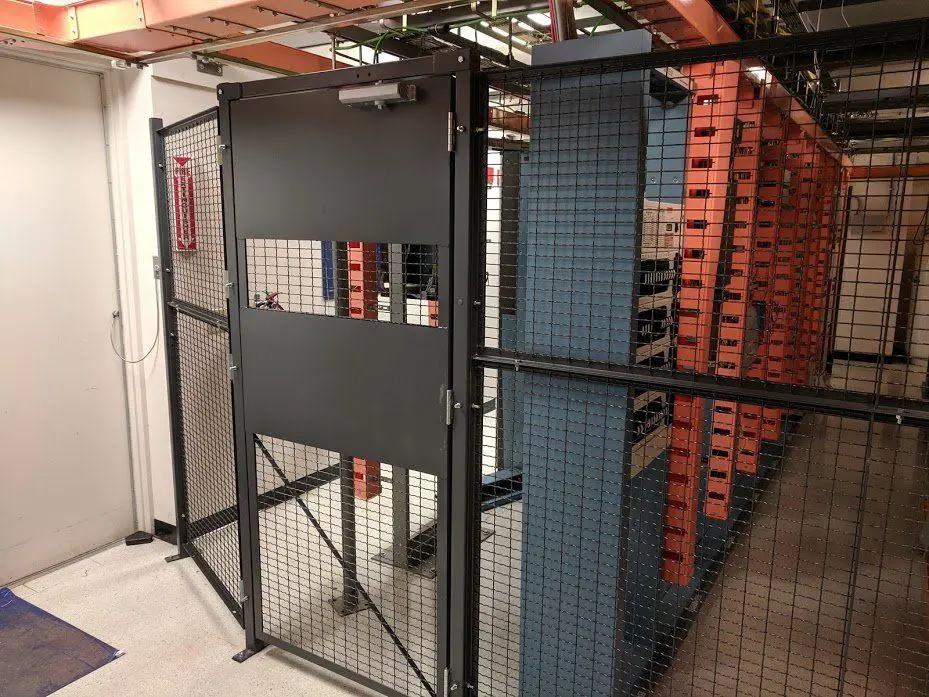
Review Door Options

Doors are often an afterthought, but they shouldn’t be. You’ll want to think about:

We offer hinged and sliding doors with various locking mechanisms and sizes to fit your access requirements.
data and server security cage

Add the Right Accessories

Your cage doesn’t operate alone. Consider:

We can integrate accessories or provide designs that support third-party systems, keeping your build clean and compliant.

Get a Quote That Reflects Your Real Needs

Don’t settle for a basic estimate. A good quote should include:

Our team works closely with end users, contractors, and data center managers to ensure every quote is accurate, fast, and specific.

Ready to Build?


A colocation cage is more than just a physical barrier; it’s part of your promise to protect client data and infrastructure. We have been manufacturing high-quality wire partitions for more than 50 years, and our systems are trusted by some of the country’s largest data centers.

Need help getting started? Our team can walk you through design, quoting, and delivery, step by step. Let's build your colocation solution together. Visit wirecrafters.com to request a quote or speak with one of our team members today.

wirecraftes get a quote button